
This post contains affiliate links, including Amazon. As an Amazon Associate we earn from qualifying purchases, at no extra cost to you. Disclosures.
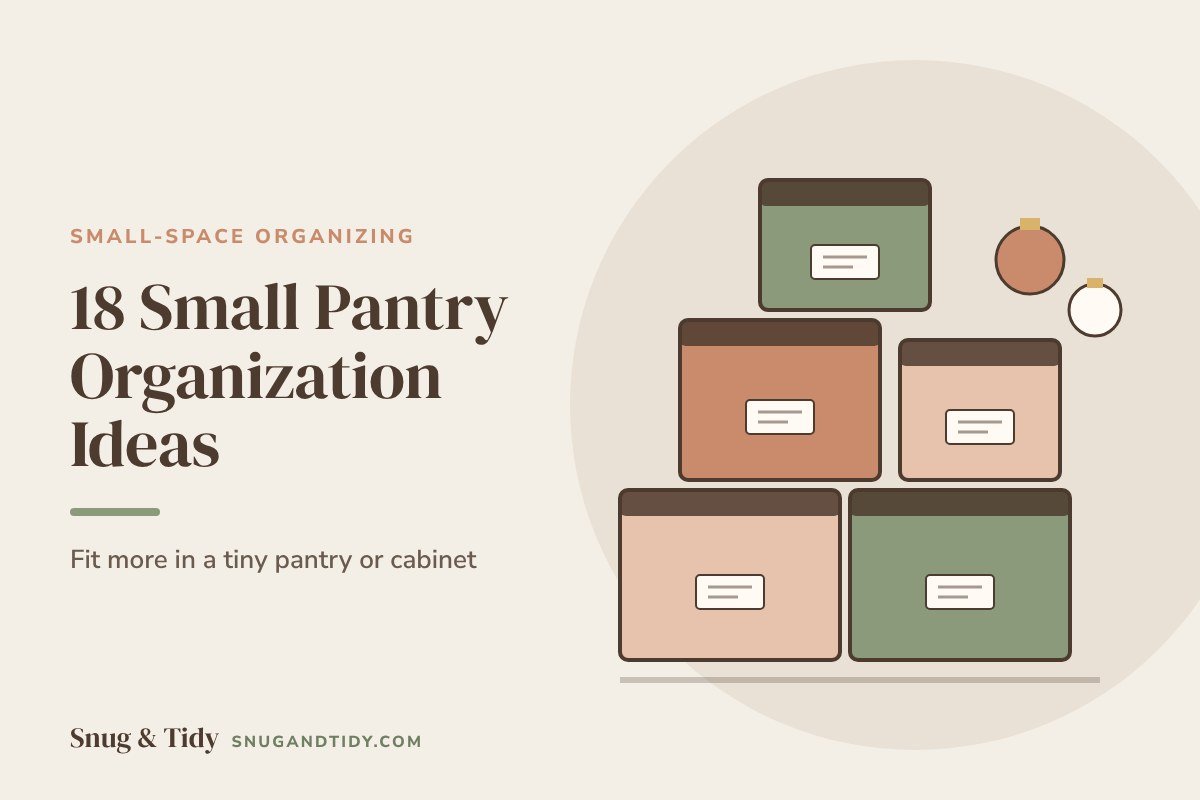
The best small pantry organization ideas do two things: use every inch (the door, the floor and the air between shelves) and make everything visible. With zones, a door rack, shelf risers and clear bins, a narrow pantry closet or a single cabinet can hold a week of groceries without the avalanche.
Here are 18 ideas, from the 1-hour reset to the organizers worth buying, plus a no-pantry section for small apartments.
Quick answerEmpty and sort the pantry, group food into zones (breakfast, baking, snacks, dinner, cans), put the most-used items at eye level, then add an over-the-door rack, shelf risers for cans and clear bins with labels. Keep a first-in, first-out row so older food gets used first.
- Biggest wins: over-the-door rack, shelf risers, turntables
- Keep visible: clear bins and labels
- Rule: heavy and bulk on the floor, kids’ snacks low, rarely used high
In this post
Start with a 1-hour reset
1. Empty everything
Take it all out and set it on the counter or table. You cannot organize around clutter, and seeing everything at once shows you exactly how much you really have.
2. Check dates and toss expired food
Check best-by and use-by dates and toss anything stale or past its prime. The USDA explains that date labels (except on infant formula) are about quality, not safety, so use your judgment on dry goods, but throw out anything with an off smell, flavor or texture, and anything with pests.
3. Group like with like
Breakfast, baking, pasta and grains, cans, snacks, sauces and oils. Your zones come from these piles.
4. Wipe the shelves
A quick wipe catches crumbs that attract pests. Let shelves dry before you put food back.
Take a photo of each shelf before you start. You will remember what lived where and see how much space the reset saves.
Set up zones
5. Eye level for daily items
The things you grab every day go at eye level: breakfast, snacks and dinner staples.
6. Low shelves for heavy and kid items
Bulk bags, drinks and kids’ snacks go low, where they are safe and easy to reach.
7. Top shelf for backups
Extra paper goods, holiday baking and rarely used appliances live on top.
Free: the 30-Day Declutter Challenge
15 minutes a day, one small space at a time. Get the 24-page printable (calendar, room checklists, tracker) plus a short daily tip by email.
Use the vertical space
8. Add an over-the-door rack
The door is the most wasted space in most pantries. A door rack holds spices, cans, snacks and wraps.
Over-the-door pantry organizer rack
A door rack can add several shelves of storage. Measure the door thickness and the depth between the door and the shelves so it still closes.
Shop on Amazon9. Use shelf risers
Risers double the use of deep shelves for cans and jars.
Expandable shelf riser, 3 tier
Tiered risers let you see every can label. Measure the shelf width and depth first; many expand from about 13 to 25 inches.
Shop on Amazon10. Add under-shelf baskets
Baskets that hang under a shelf use the empty air above shorter items. They are perfect for wraps, bags of chips and seasoning packets, and they slide on without tools.
11. Stack with bins, not loose items
Stackable bins turn wasted height into usable space without things tipping over. Keep the heavier bin on the bottom and what you use most on top.
Make everything visible
12. Switch to clear bins
You buy less double when you can see what you have.
Clear pantry bins with handles, set of 6
Handles make deep shelves work like drawers. Measure shelf depth and height, and choose bins that fit two across if possible.
Shop on Amazon13. Use turntables in corners
A lazy Susan makes oils, sauces and spices reachable in deep corners.
Turntable lazy Susan, 10 inch, clear
A clear turntable in a corner or deep shelf ends the hunt for the back bottle. Check the diameter against your shelf depth.
Shop on Amazon14. Decant only what you use weekly
Airtight containers keep cereal, pasta and flour fresh and stack neatly, but decanting everything takes time. Start with the items you use every week.
Airtight food storage containers, set
Square containers stack and fit shelves better than round. Look for airtight lids and sizes that fit your shelf height.
Shop on Amazon15. Label everything
Labels keep the system working when someone else unloads groceries. Simple handwritten labels on masking tape work fine.
Declutter Checklist Printable: Room-by-Room List
A sample layout for a narrow pantry closet
Here is one way to set up a typical narrow pantry with five shelves and a door. Adjust the zones to how your household eats.
- Door: spices, small packets, foil and wraps in an over-the-door rack
- Top shelf: backups, holiday baking and rarely used appliances in labeled bins
- Shelf 2 (eye level): breakfast and dinner staples in clear bins, pasta and grains in square containers
- Shelf 3: cans on a riser, sauces and oils on a turntable
- Shelf 4: snacks in open bins, kids’ snacks in front
- Floor: drinks, bulk bags, potatoes and onions in breathable baskets
Keep one empty bin as a landing spot for groceries on shopping day. When it fills up, it is time for a 10-minute tidy.
No pantry? Make one
16. Rolling cart
A slim rolling cart between the fridge and wall holds snacks, oils and spices. Many slide-out carts are 5 to 7 inches wide, so measure the gap and the depth of your counter before you order.
17. A cabinet with pull-out bins
Turn one tall cabinet into a pantry with clear bins you pull out like drawers. Give each bin one zone, such as breakfast, baking or dinner, so everyone in the house knows where things go.
18. A shelf above the fridge or a wall rack
The space above the fridge holds bins of backups. A wall-mounted rack near the kitchen does the job in rentals that allow it.
Home Reset System
Want the whole home calm, not just one corner? The Home Reset System is a 50-page fillable printable with a timed room-by-room reset, a six-question keep or let go path, a 6-box sort, weekly cleaning schedules and a 30-day kickoff. It comes as 4 PDFs (US Letter and A4, color and low-ink) made for small homes, rentals and busy weeks.
Get the Home Reset System| Organizer | Best for | Watch out for |
|---|---|---|
| Over-the-door rack | Spices, cans, snacks | Door clearance and weight limits |
| Shelf risers | Cans and jars | Measure shelf width |
| Clear bins with handles | Snacks, packets, baking | Bins that are too deep for the shelf |
| Turntables | Oils, sauces, corners | Size too big for the shelf depth |
| Airtight containers | Cereal, pasta, flour | Round shapes waste space |
Keep it organized
- Put new groceries behind older ones (first in, first out).
- Keep a running grocery list on the pantry door.
- Do a 10-minute tidy every week and a full reset each season.
Weekly Cleaning Schedule Printable
1-hour small pantry reset
- Empty every shelf
- Toss expired or stale food
- Wipe and dry the shelves
- Group food into zones
- Put daily items at eye level
- Add a door rack and shelf risers
- Move loose items into clear bins
- Label bins and shelves
- Write a list of what you need to restock
FAQ
How do you organize a very small pantry?
Empty it, group food into zones, put daily items at eye level, then use the door with an over-the-door rack, add shelf risers and clear bins, and label everything.
What is the best way to use a deep small pantry?
Use clear bins with handles that pull out like drawers, turntables in corners and shelf risers so nothing hides in the back.
How do I organize my kitchen if I do not have a pantry?
Use a slim rolling cart, turn one tall cabinet into a pantry with pull-out bins, and store backups in bins above the fridge.
Should I decant everything in my pantry?
No. Decant the dry goods you use every week, like cereal, pasta and flour. Leave the rest in original packages inside clear bins.
How often should I clean out my pantry?
A 10-minute tidy each week and a full reset with a date check each season keeps a small pantry under control.
Final thoughts
A small pantry works when you can see everything and every inch has a job. Start with the 1-hour reset, add a door rack and risers, and label as you go. The space will feel twice as big.
Save this for later: pin the image below to your Pinterest board so it is easy to find when you need it.
Sources: USDA Food Safety and Inspection Service, Food Product Dating.
About Snug & Tidy: we share cozy decor, simple organizing and seasonal ideas for real homes on a real budget. Product suggestions are chosen for fit and value, and some links are affiliate links (disclosures). Prices and availability change, so check the retailer before you buy.